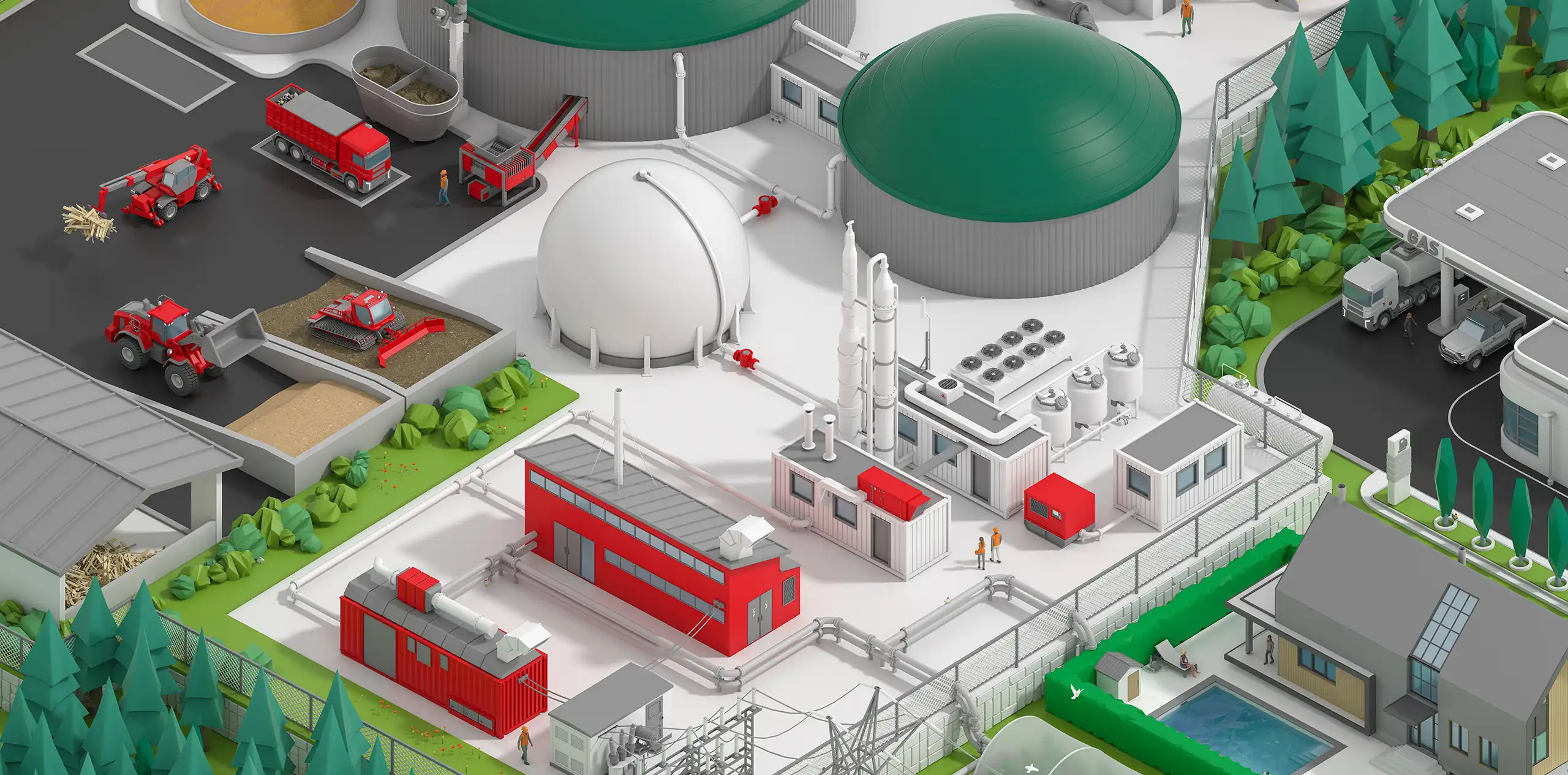
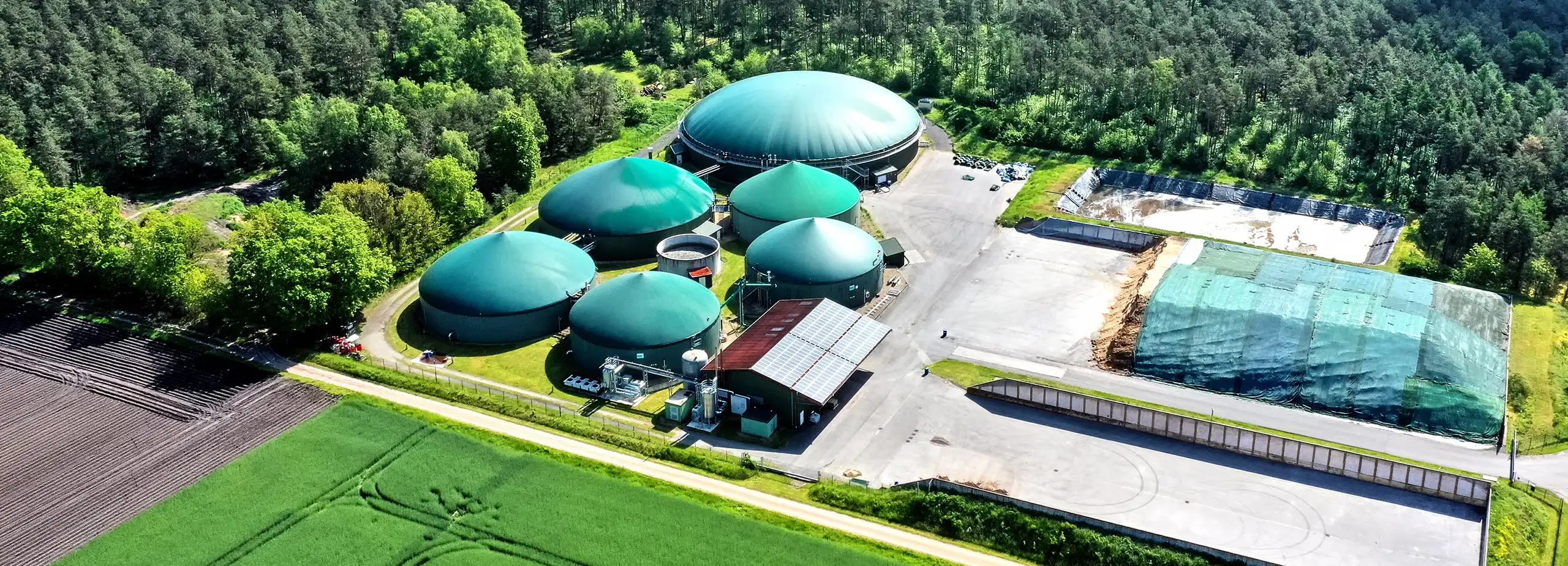
Biogas is a renewable gas produced by the anaerobic (oxygen-free) digestion of organic waste, mainly from the agricultural, agri-food and municipal sectors (slurry and manure, agri-food residues, sludge, bio-waste, etc.). A methanisation plant is an industrial facility that reproduces this natural phenomenon in a controlled manner. It produces raw biogas composed mainly of methane (CH₄) and carbon dioxide (CO₂), to which impurities (water vapour, H₂S, siloxanes, VOCs, particles) are added. Beyond biogas production, a methanisation plant combines fixed installations and mobile equipment. These include the preparation of organic matter (called "inputs"), biogas circulation, recovery equipment and technical facilities. The mobile equipment is used for handling and transport on site. The reliability of these installations depends in particular on filtration, an area in which HIFI FILTER® is involved. These elements constitute the overall environment of a methanisation plant. Let us now look at how biogas is produced, starting with the methanisation stage.
Methane production: biogas production
The inputs are prepared prior to the methanisation process. These operations vary depending on the type of waste and the facility: removal of unwanted materials, homogenisation and, if necessary, dilution or grinding. The aim is to obtain a sufficiently uniform and pumpable material to feed the process. Once prepared, the organic materials are fed into the digester. This hermetically sealed, oxygen-free tank is the heart of the process. To function efficiently, digestion takes place under controlled conditions: the temperature is maintained between 40 and 60°C and the material is continuously stirred using an agitator to ensure a homogeneous environment conducive to bacterial activity. Inside, microorganisms naturally present in the inputs gradually break down the organic matter and convert part of it into gas. Methanisation then produces two streams: a recoverable digestate (the residual material from digestion, liquid and/or solid) and raw biogas (a mixture of CH₄ and CO₂). This biogas naturally contains water vapour, H₂S, siloxanes, VOCs and fine particles, which must be removed before any energy recovery can take place.
Biogas purification: an essential foundation
Before any recovery, biogas from the digester must be treated in order to protect downstream equipment. This purification process aims to remove the main impurities naturally present in raw biogas. In practice, purification is based on three essential functions.
The first is to retain solid particles present in the gas in order to prevent premature wear of pipes, control devices and recovery equipment. This particle filtration is generally implemented directly on the biogas pipes. To meet this need, HIFI FILTER® offers gas filtration units mounted on pipes (reference KG and SG KIT). The second function of purification concerns moisture management. Loaded with water vapour at the digester outlet, biogas must be dehumidified to prevent the formation of corrosive condensates in pipes and equipment. Finally, biogas may contain undesirable compounds such as hydrogen sulphide (H₂S), siloxanes or certain volatile organic compounds (VOCs). Removing these compounds helps to limit corrosion, premature wear of equipment and deposits during combustion or compression of the gas. Once these common purification steps have been completed, the biogas can be directed towards one of two recovery routes: cogeneration or conversion into biomethane.
Cogeneration
Cogeneration is a method of energy recovery that involves simultaneously producing electricity and heat from the same fuel. In a methanisation plant, this fuel is biogas: it powers an engine that generates electricity, which is used on site or fed into the grid, while the heat is recovered and used on site, in particular to maintain the temperature of the digester or heat buildings.
Protection of the cogeneration engine
The cogeneration engines used in anaerobic digestion plants are industrial engines designed to operate at a stable speed over long periods of time. Engine availability is therefore a major issue. Controlled maintenance, based in particular on appropriate filtration, ensures safe operation and limits unplanned downtime.
Cogeneration engines are equipped with several filters, each playing a specific role in protecting the engine:
Gas filters: final filtration of biogas before combustion, protection of sensitive components.
Air filters: cleanliness of the combustion air admitted into the engine.
Oil filters: protection of mechanical parts by removing solid contaminants present in engine oil.
Coolant filters: limiting deposits and protecting the cooling system.
Crankcase ventilation filters: regulate crankcase ventilation and limit the entry of contaminants.
Ambient environment in cogeneration
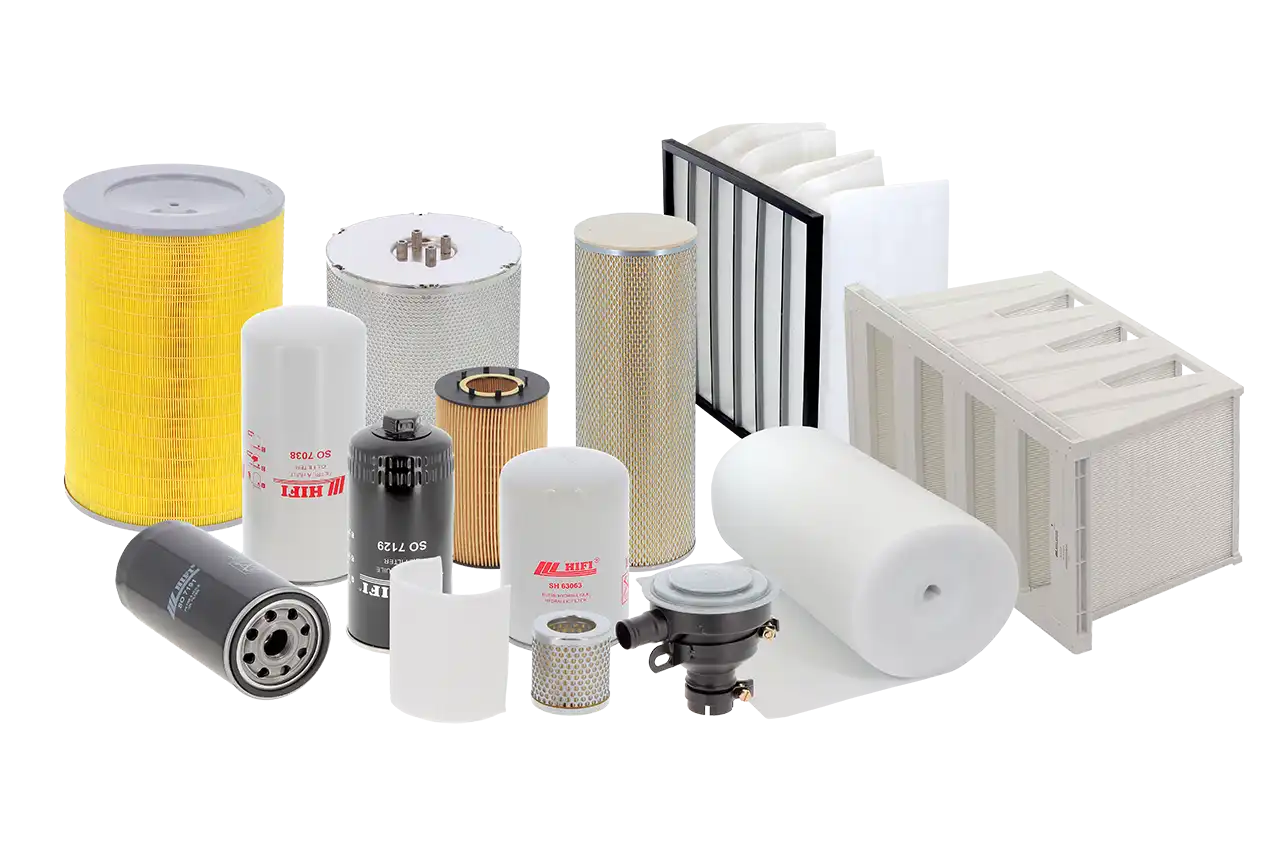
Beyond the filters mounted on the engine, the ambient environment directly influences the reliability of the cogeneration installation. In a methanisation plant, technical rooms and electrical cabinets are often exposed to dust from agricultural or industrial activity. If the ventilation air is not filtered, these particles can be sucked in, accumulate on equipment (fans, heat exchangers, grilles) and disrupt cooling. Appropriate air filtration helps to limit clogging and maintain stable operating conditions. HIFI FILTER® offers pocket filters, filter mats, PPI foams and filter strips for the ventilation of technical rooms, containers and electrical rooms. The protection of electrical cabinets is based on the same principle: a supply of filtered air limits internal clogging and contributes to the reliability of the equipment.
HIFI FILTER® solutions
We offer dedicated cogeneration solutions covering both engine protection (gas, air, oil, coolant and crankcase ventilation filtration) and ambient environment control (ventilation of technical rooms and electrical cabinets), including bag filters, filter mats, PPI foams and filter strips. Our teams can help you select the right products for your engine and installation. Contact us!
Other valuations
In addition to cogeneration, biogas can be converted into biomethane. Methane production also generates a by-product, digestate, which is recovered through a separate process.
Conversion of biogas into biomethane
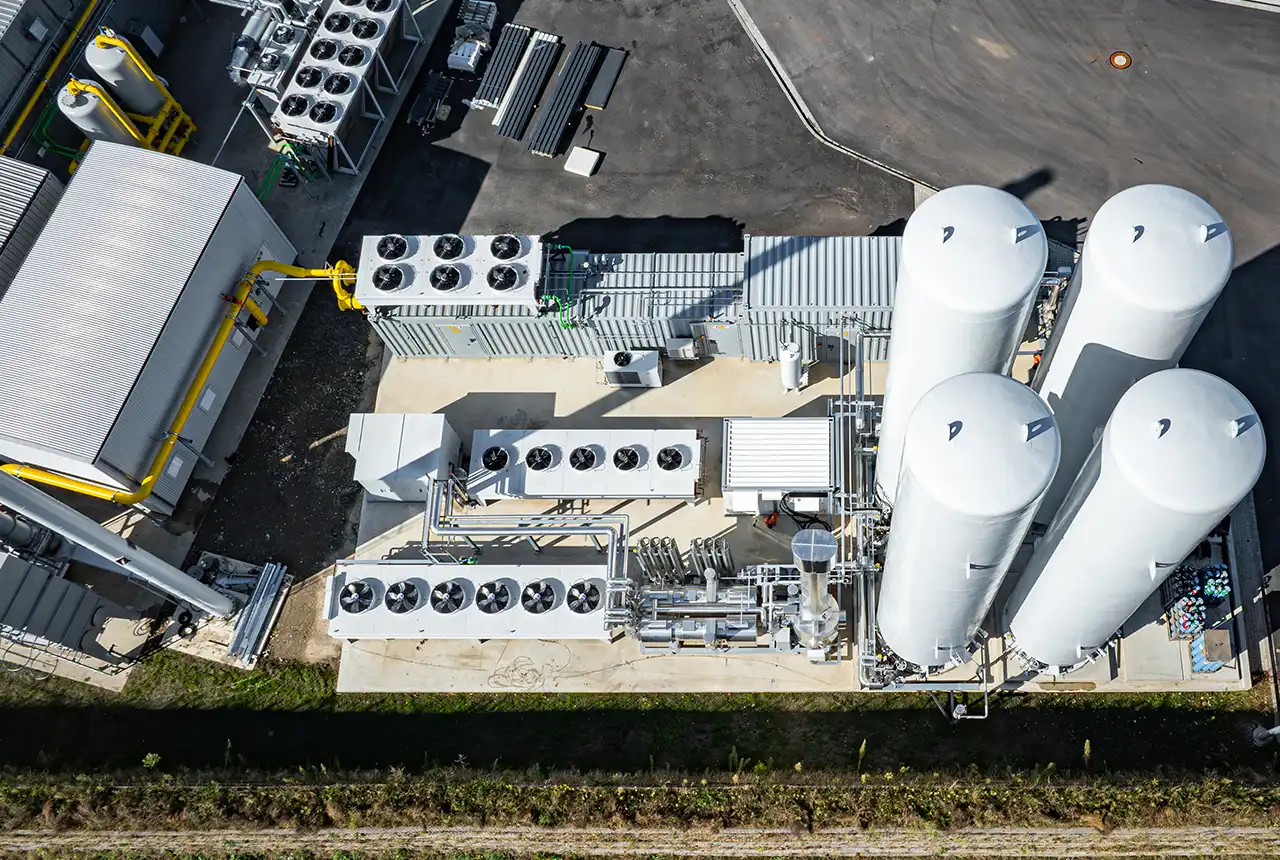
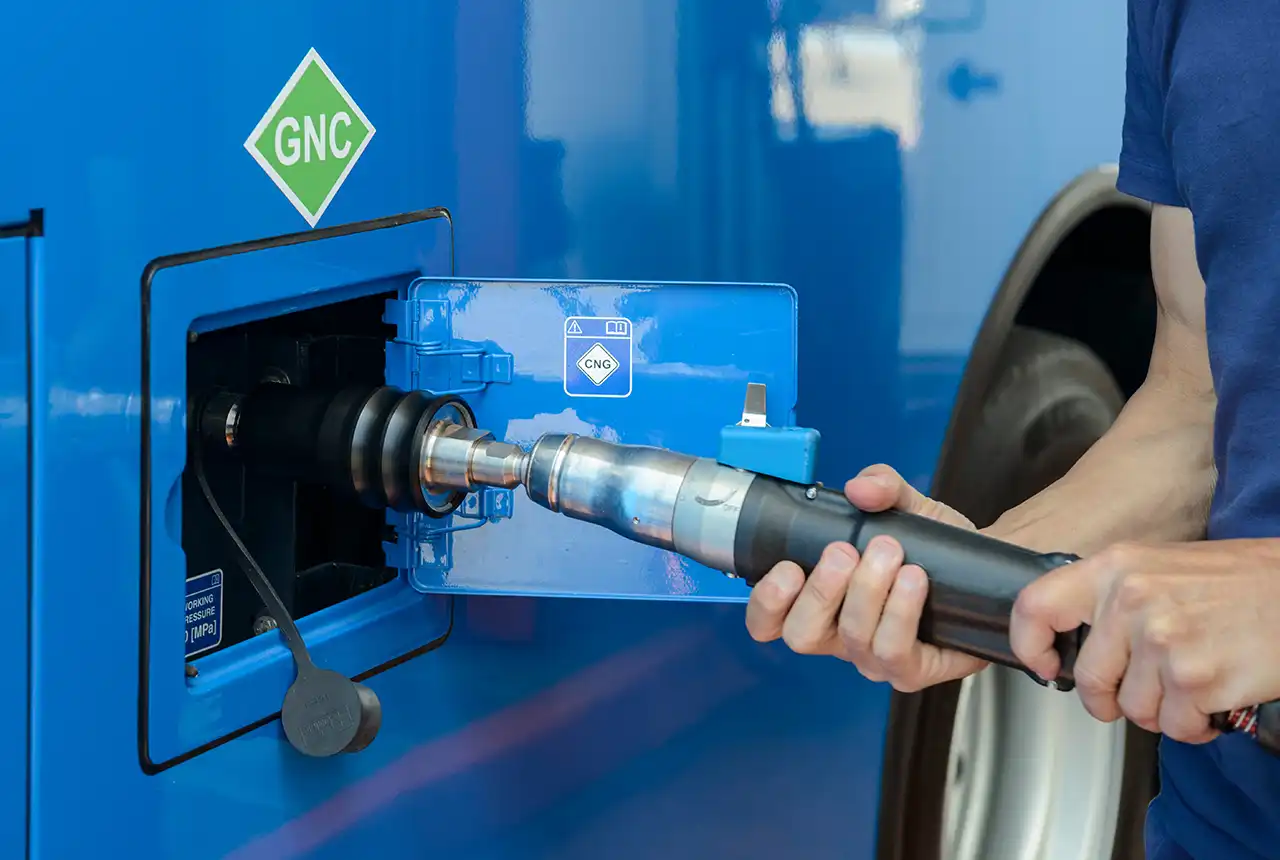
Biomethane is purified biogas enriched with methane, whose quality is similar to that of natural gas. It is produced by treating biogas so that it meets gas network specifications and can be injected or used as fuel. In practical terms, after the standard purification stages, an upgrading stage increases the methane content by reducing the carbon dioxide (CO₂) content. This process therefore involves higher quality requirements than cogeneration.
Digestate recovery
In addition to biogas production, methanisation generates digestate, i.e. the organic matter remaining after the digestion phase. It comes in liquid or solid form, or separated into two fractions. Rich in fertilising elements (nitrogen, phosphorus, potassium), digestate is mainly used in agriculture as an organic fertiliser, partially replacing mineral fertilisers. Its management and recovery thus constitute an additional outlet for the methanisation process, distinct from energy production.
Methane conversion transforms organic matter into biogas, which can be used in cogeneration or, after additional treatment, into biomethane. It also generates a valuable by-product: digestate. In all configurations, the reliability of a plant depends on controlled biogas and equipment protection. Filtration occurs at several levels in a methanisation plant in order to protect equipment from fouling, corrosion and premature wear. HIFI FILTER® is used in particular on the biogas line, cogeneration engines, ventilation of technical rooms and electrical cabinets, as well as on machinery and vehicles operating on site. Beyond these applications directly related to the biogas process and recovery, other filtration needs may arise in anaerobic digestion plants: filtration of industrial liquids, hydraulic circuits, compressed air and vacuum, dust removal solutions, and even fuel distribution. These are all environments where HIFI FILTER®'s expertise can be put to good use. To find out more and identify the references compatible with your configuration, contact our teams!
Workers in the cabs of tractors or self-propelled sprayers remain vulnerable if they are not adequately protected against toxic inhalation. To limit their contact with plant protection products, European standards 15695-1 and 15695-2 have been created.
Filtration is essential to the performance and lifespan of your systems. But with so many options to choose from, how can you be sure you're making the right choice?